Plantar Fasciitis treatment in Thane | Kalwa | Parsik Nagar

Dr. Vivek Maurya (MBBS, M.S Orthopaedics, F.I.F.A.S)
(Consultant Orthopaedic Foot and Ankle Surgeon)
ORTHO WELLNESS CLINIC
Shop 12, Building-2, Vastu Anand Society, Parsik Nagar, Kalwa, Thane(W) 400605

Heel pain is one of the most common foot complaints among adults. Many patients assume it is "just strain" or a temporary issue. But when the pain is sharp with your first steps in the morning or returns after long hours of standing, it may be plantar fasciitis.

If you are experiencing persistent heel pain in Thane or Kalwa, early specialist evaluation can prevent chronic discomfort and long-term complications.

Ankle Sprain That Never Healed – When Do You Need Surgery?

An ankle sprain is often dismissed as a minor injury—something that will “settle with time.” While most sprains do heal well with basic care, a significant number of patients continue to experience pain, instability, or a sense of “giving way” months after the initial injury.

If you are still dealing with ankle discomfort long after a sprain, it is not normal—and more importantly, it is not something you should ignore.

This article explores why some ankle sprains fail to heal, how to recognize warning signs, and when surgery becomes the right solution.

UNDERSTANDING THE ANATOMY:

The ankle joint is stabilized by a complex network of ligaments that connect bones and prevent excessive movement. The most commonly injured structures in an ankle sprain are the lateral ligaments, located on the outer side of the ankle (Figure 1).

Key Ligaments Involved
  • Anterior Talofibular Ligament (ATFL)
    The most frequently injured ligament, especially during inversion injuries (foot turning inward).
  • Calcaneofibular Ligament (CFL)
    Provides additional lateral stability, often involved in more severe sprains
  • Posterior Talofibular Ligament (PTFL)
    Rarely injured, usually only in high-grade trauma.

These ligaments work together to maintain ankle stability during walking, running, and sudden directional changes. Of these the Anterior Talofibular ligament(ATFL) is the most important and most commonly injured.
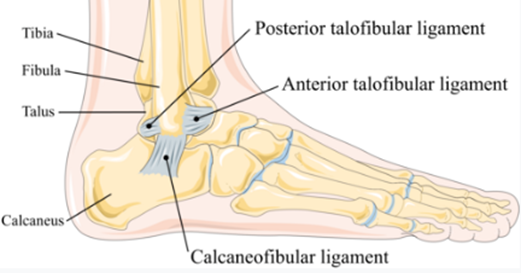
Figure 1: The lateral ankle ligament complex

What Is Ankle Sprain?

An ankle sprain occurs when these ligaments are stretched beyond their normal limits or torn.

Grades of Injury
  • Grade 1: Mild stretching, minimal swelling
  • Grade 2: Partial tear, moderate swelling and pain
  • Grade 3: Complete tear, significant instability

Most Grade 1 and 2 injuries heal well with conservative treatment. However, Grade 3 injuries—or poorly managed sprains—can lead to long-term problems requiring surgery.

Mechanism of injury

It occurs usually following a twisting injury to the foot (Figure 2). Though it can also occur following a road traffic accident or a fall.

  • Runners (especially long-distance)
  • Sudden increase in activity like running, jumping or dancing.
  • Prolonged standing professions e.g.: Medical professionals, workers, teachers etc
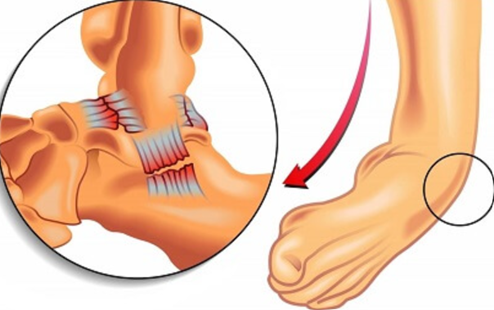
Figure 2: Showing a twisting injury to the foot

Why Do Some Ankle Sprains Not Heal?

Persistent symptoms after an ankle sprain are more common than many realize. The reasons include:

1. Incomplete Healing of Ligaments

Ligaments may heal in a lengthened or weakened state, leading to instability.

2. Repeated Microtrauma

Returning to activity too early can repeatedly stress the healing ligament.

3. Missed Associated Injuries

These may include:

  • Cartilage damage within the joint
  • Tendon injuries
  • Small fractures
4. Chronic Ankle Instability

A condition where the ankle repeatedly “gives way,” especially on uneven surfaces.

5. Poor Rehabilitation

Lack of proper physiotherapy leads to weakness, poor balance, and recurrence.

Clinical Evaluation And Diagnosis

A detailed and structured evaluation is critical in identifying the exact cause of persistent symptoms.

1. Clinical Examination

A specialist foot and ankle surgeon will assess:

  • Tenderness over specific ligaments
  • Ankle stability using stress tests
  • Range of motion
  • Gait and balance
2. Imaging Studies
X-rays
  • Rules out fractures or alignment issues
MRI Scan
  • Essential in chronic cases
  • Detects ligament tears, cartilage injuries, tendon pathology
CT Scan (Selective Cases only)
  • Useful for evaluating subtle bone injuries or joint incongruity
Non-Surgical Management – First Line of Treatment

Most patients benefit from a structured non-operative approach. A first-time injury usually heals very well.

1. Physiotherapy

A focused rehabilitation program is the cornerstone of recovery. Key components:

  • Strengthening exercises
  • Proprioception (balance training)
  • Functional training
2. Bracing and Support
  • Ankle braces provide external stability
  • Useful during sports or high-risk activities
3. Activity Modification
  • Avoid uneven terrain
  • Gradual return to sports
4. Medications
  • Short-term use of anti-inflammatory medications
  • Pain control when necessary
5. Injections (Selective Cases)
  • Platelet-rich plasma (PRP) in selected patients (Though the benefit is controversial)
  • Never opt for a steroid injection in a ligament injury. Hence the role of consulting a specialist foot and ankle surgeon becomes important.
Clear Indications for Surgery
  • Persistent instability despite 3–6 months of rehabilitation
  • Recurrent ankle sprains
  • Confirmed high grade ligament tear on MRI
  • Associated injuries (cartilage damage, impingement)
  • Functional limitation affecting daily life or sports

In simple terms, if your ankle is not reliable anymore, it needs to be fixed.

Types of Surgical Options

Modern ankle surgery focuses on restoring stability while preserving natural movement.

1. Ligament Repair (Brostrom Procedure)

The most commonly performed surgery.

  • Tightens and repairs the torn ligament
  • Restores normal anatomy

I personally prefer a Modified Brostrom-Gould procedure which involves the native inferior extensor retinaculum for repair. It gives excellent long-term outcomes compared to traditional Brostrom procedure.

2. Arthroscopy (Keyhole Surgery)

Often combined with ligament repair.

Allows treatment of associated conditions like:

  • Cartilage injuries
  • Loose bodies
  • Synovitis
  • Impingement
Recovery After Surgery

Recovery is structured and progressive.

Phase 1 (0–2 weeks)
  • Immobilization
  • Wound healing
Phase 2 (2–6 weeks)
  • Gradual weight-bearing
  • Controlled movements
Phase 3 (6–12 weeks)
  • Strengthening and balance training
Phase 4 (3–6 months)
  • Return to sports and full activity

Most patients regain excellent function with proper rehabilitation.

Preventing Chronic Ankle Problems

Prevention is always better than treatment.

In athletes, it may present as:
  • Reduced performance
  • Altered gait
  • Compensatory knee or hip pain

Preventing Chronic Ankle Problems

Prevention is always better than treatment.

Key Strategies:
  • Complete your rehabilitation fully
  • Strengthen ankle and leg muscles
  • Use proper footwear
  • Avoid early return to sports
  • Address instability early

Final Thoughts

An ankle sprain that hasn’t healed is not just a lingering injury—it is a signal that something is wrong.

The good news is that with proper diagnosis and timely management, most patients can return to full activity without limitations. Surgery, when required, is highly effective and can restore both stability and confidence in the ankle.

If your ankle still doesn’t feel “right,” it probably isn’t—and getting it evaluated early can prevent long-term complications.

When to Seek Expert Care

Consider consulting a Foot and Ankle specialist if:

  • Pain persists beyond 6–8 weeks
  • You experience repeated ankle twists
  • There is a constant feeling of instability
  • You are unable to return to your previous level of activity

Early intervention can make the difference between prolonged discomfort and complete recovery.


Common Questions Patients Ask About Chronic Ankle Sprains

1) Why is my ankle still painful months after a sprain?
Persistent pain after an ankle sprain is usually due to incomplete ligament healing, chronic ankle instability, cartilage injury, or tendon involvement. If pain lasts beyond 6 weeks, consider approaching a Foot and Ankle Surgeon for proper treatment.
2) How long does an ankle sprain normally take to heal?
How long does an ankle sprain normally take to heal?
3) How long does an ankle sprain normally take to heal?
Recurrent ankle sprains usually occur because of weak ligaments, improper healing inadequate physiotherapy.
4) Can a torn ankle ligament heal without surgery??
Yes, it can heal with proper immobilization and physiotherapy during the first twist/injury. However, if there is repeated twisting injury or chronic instability then surgery may be required to restore stability.
5) Do I need an MRI for a chronic ankle sprain?
MRI is recommended if the symptoms persist beyond 6 weeks, presence of instability or when an associated injury to the tendon or bone is suspected.
6) What happens if I ignore a chronic ankle sprain?
Ignoring can lead to cartilage damage and early ankle arthritis. Early treatment prevents long-term joint damage.
7) What is the best treatment for chronic ankle sprain?
The best treatment is highly individualized. A proper evaluation is the first step in determining the best possible outcome. Treatment is guided by degree of tear, chronicity, instability and expected outcome.
8) Is walking good or bad for a chronic ankle sprain?
Controlled walking is beneficial, but avoid uneven surfaces, excessive strain and follow the prescribed protocol by your doctor.
9) Do ankle braces really help?
Ankle braces provide external support and reduce the risk of re-injury. They are especially useful in sports or high demand activities.
10) When should I consider surgery for an ankle sprain?
You should consider surgery if symptoms persist for more than 3-6 months, frequent twisting episodes to ankle, daily activities are affected or when MRI shows significant damage.
11) What is the ideal recovery time after ankle ligament surgery?
Most patients start protected weight bearing from 3rd week of surgery in a boot. Boot can be weaned off from the 6th week. However, complete return to sports or strenuous activity like running or jumping may take 3 months.
12) How do I know if my ankle sprain is serious?
Do not ignore the warning signs such as persistent ankle pain, instability, difficulty walking or recurrent twisting injuries. These symptoms require a specialist foot and ankle evaluation.

Your ankle should support you—not limit you.


Are you experiencing persistent ankle pain or instability in Thane, Kalwa or Navi Mumbai?
Book a Consultation at Ortho Wellness Clinic
Heel pain is treatable. With the right approach, most patients return to normal activity without surgery.
Schedule a consultation at Ortho Wellness Clinic, Thane for comprehensive foot and ankle evaluation and evidence-based treatment.
Early care. Accurate diagnosis. Long-term relief.
Dr. Vivek Maurya
(MBBS, M.S Orthopaedics, F.I.F.A.S)
USA trained Consultant Orthopaedic Foot & Ankle Surgeon
Dr. Vivek Maurya is a dedicated Orthopaedic Surgeon with focused expertise in Foot and Ankle disorders. With advanced fellowship training and years of clinical experience, he specializes in the precise diagnosis and management of complex heel pain, sports ankle injuries, deformities, and diabetic foot conditions.
At Ortho Wellness Clinic, his approach goes beyond symptomatic relief. Each patient undergoes a detailed clinical and biomechanical evaluation to identify the true cause of pain — ensuring targeted and long-lasting treatment outcomes.
For consultation: 9702827531
Visit to know more: drvivekmauryaortho.in
ORTHO WELLNESS CLINIC
Shop 12, Building-2, Vastu Anand Society, Parsik Nagar, Kalwa, Thane(W) 400605
Book Appointment →
Go Back Top